
Kia PV5 Cargo Review 2026
Kia PV5 Cargo At A Glance

 Refined on the move and great to drive. Impressive ride comfort. Keenly priced.
 Smaller battery model has limited range. Some interior trim feels a bit cheap. Obstructive A-pillar is annoying.
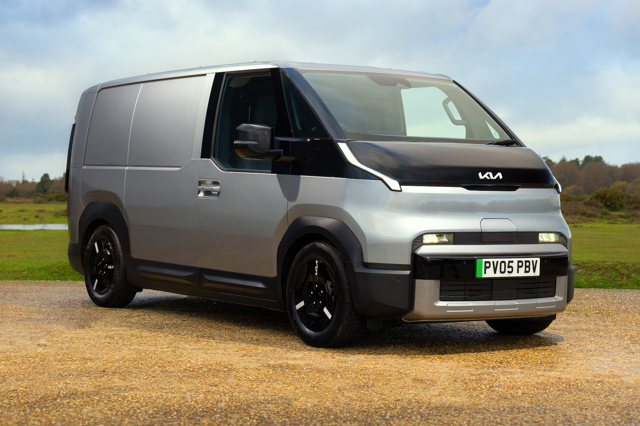
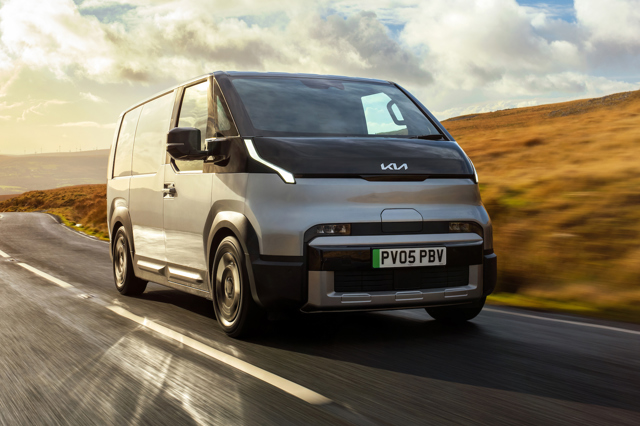
This is the Kia PV5 - Kia's electric van that’s all about flexibility. As well as the Kia PV5 Cargo tested here, there’s a six-seat MPV called the Kia PV5 Passenger and in time the range will expand to include a crew van and multiple factory conversions, including a tipper, box-van, freezer van, wheelchair accessible vehicle and even a small camper.
All models are official and will to be sold through a select number of Kia’s UK dealers.
Size-wise, it’s smaller than a Ford e-Transit Custom, but bigger than a Citroen Berlingo, to use two popular examples. Indeed, its closest rival size-wise is probably the Volkswagen ID. Buzz Cargo, which is also only available with electric power. The Kia is notably cheaper, though, by around 15%.
Two batteries are offered – a 51.5kWh version which comes with a 120PS electric motor, or a 71.5kWh model with 160PS. There are also two trim levels – Essential and Plus – both of which are well-equipped. The claimed range is 184 miles for the smaller battery or 258 miles for the bigger.
It’s built on a new ‘skateboard-style’ platform called PBV which is low, flat and most importantly adaptable to various versions. More importantly, the Kia PV5 will come with Kia’s 100,000-mile, seven-year warranty that the brand is famous for.
Kia is a company with a reputation for disrupting the market. Over 35 years have passed since the Korean firm came to the UK with the Kia Pride, undercutting all of its rivals with a car that was fun to drive and ultra-reliable.
But it wasn’t until the late 2000s that it really got its act together, diversify into SUVs and high quality, mainstream models, all backed up by a no-quibble seven-year warranty.
Its Midas touch saw Kia go from being a commendable also-ran to a class leader in multiple markets, most recently with electric cars where it is regarded as one of the very best brands there is – and now, it’s moved into vans
As a first attempt in a new market for Kia, the PV5 shows immense promise. PVB dealers are focused on small business customers – Kia isn’t chasing big fleet orders for the new van just yet until volumes ramp up. It's ideal for small businesses or sole operators who want an electric van with great dealer back-up and a long warranty.
Driving the Kia PV5 Cargo
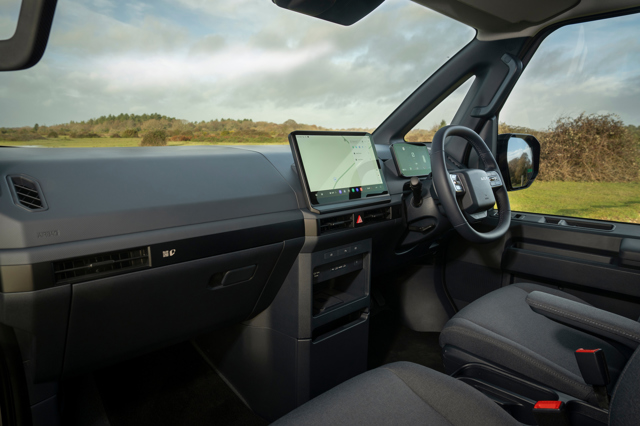
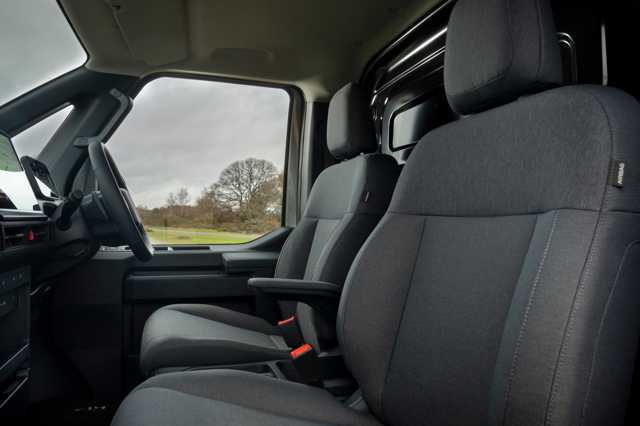
It’s easy to get comfortable in the Kia PV5 Cargo, although some drivers may find the steering wheel could benefit from a bit more of a rake angle, as the wheel sits a bit low.
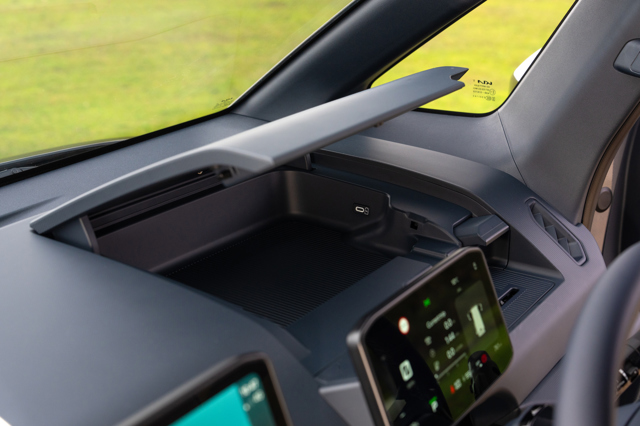
The dash is smartly laid out and all of the controls are well placed in an ergonomically excellent manner. There's a seven-inch digital instrument cluster and a large 12.9-inch central navigation screen that runs Android Automotive OS, the first time Kia has ever used this software on a vehicle. We found it reactive and easy to use.
Depending on if you opt for the 51.5kWh or Long Range 71.2kWh battery pack, you get a competitive range of up to 184 miles or 258 miles on a charge – that’s based on the WLTP cycle and is supposedly fully laden. Of course what you'll see in the real world, especially during winter, will be considerable less.
The smaller battery model has a 120PS motor with a 0-62mph time of 16.2 seconds when fully laden, while the larger 71.2kWh battery is paired with a 160PS electric motor giving a 12.4 second 0-62 time. Top speed is limited to 84mph on both and each is front-wheel-drive.
Both units are set up for fast charging and a 10% to 80% top up takes less than 30 minutes on a 150kW charger.
It’s a rewarding van to drive and is more eager than those 0-62mph times might suggest, thanks to the instant torque from the electric motors. It’s also extremely refined, with a supple ride even when unladed and responsive steering.
It also comes with a host of assistance systems including automatic emergency braking, lane-keeping assist and blind-spot assist. Fortunately these can be easily turned off.
We do have a couple of gripes. The first is that the front pillars on each side are thick and quite intrusive, leaving a large blind spot at junctions and when joining roundabouts. The second is that some of the trim in the cabin, especially around its lower reaches, feels harsh and plasticky, although most of the upper trim is of a much higher quality.
Kia PV5 Cargo interior
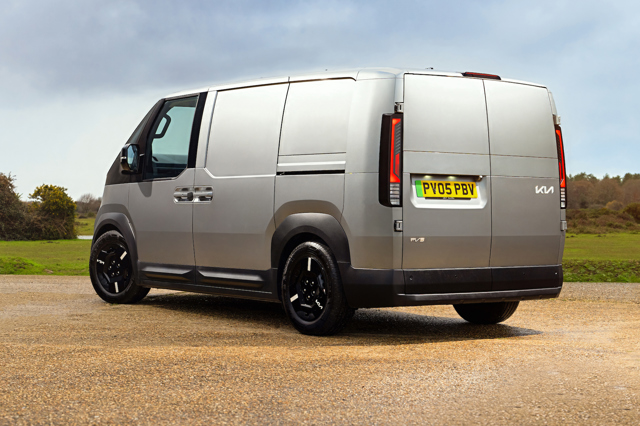
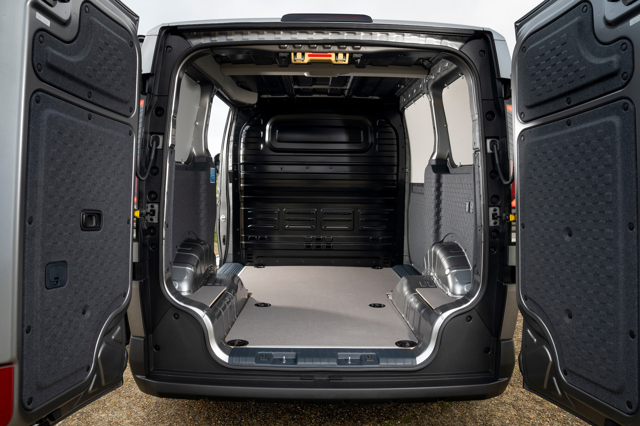
There’s a choice of rear door and the PV5 – either vertical barn-style doors that open through 180-degrees, or a lift-up tailgate, with the lowest rear step height of any medium van on the market.
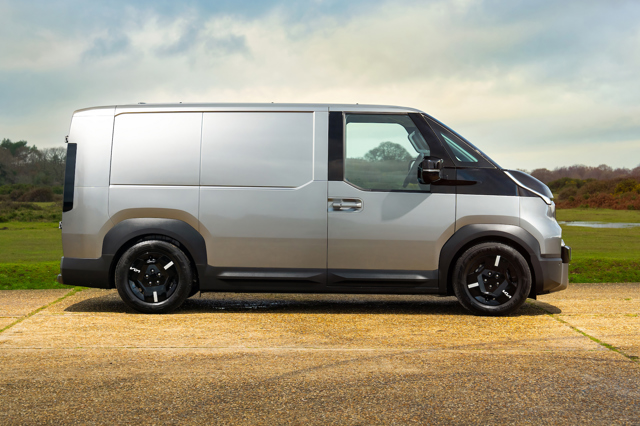
Initially available in L2/H1 format, with larger models and a short-wheelbase version to follow, the PV5 has a cargo volume of 4.4 cubic metres and a payload of 665kg to 790kg depending on battery choice.
There are eight tie-down points, a single side loading door, and a load bay long and wide enough to accommodate two Euro pallets, which can be loaded through both the side and rear doors. There is also the option of a 230V, three-pin socket in the loadspace to power tools or battery chargers using the van's high voltage battery.
At launch, the Kia PV5 Cargo was only offered as a two-seater, with three-seater and walk-through cab options to follow, including one with the passenger seat deleted and a sliding door in the bulkhead, ideal for local delivery work.
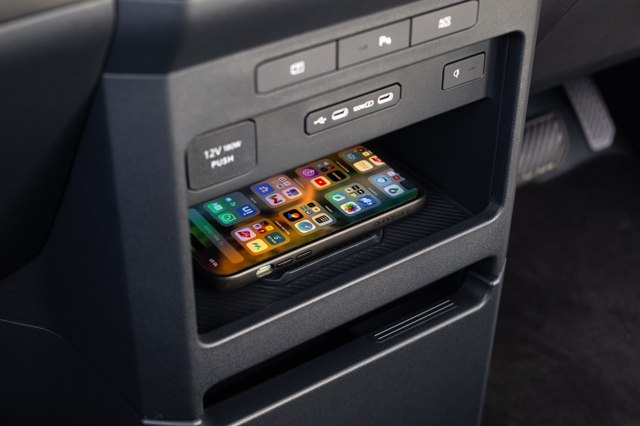
Kia’s has also modified its ‘AddGear’ modular system found on passenger cars to allow you to add things that might be useful, such as extra cupholders , tool racks, storage binds or USB sockets – all of which can be specified direct from the factory.
