Kia PV5 gains new L1/H1 and L2/H2 variants and approved conversion partners

Wed, 22 Apr 2026
Kia has added two new models to the PV5 Cargo line-up, with Kia PV5 Cargo L1/H1 and L2/H2 models added to the range.
The Kia PV5 Cargo L1/H1 offers 4.0 cubic metres of load space and payload of up to 800kg, while the larger L2/H2 provides 5.2 cubic metres of cargo volume and expected payload of 630kg.
First UK customer deliveries of the L1/H1 are expected within the next few months, with the L2/H2 due in early 2027.
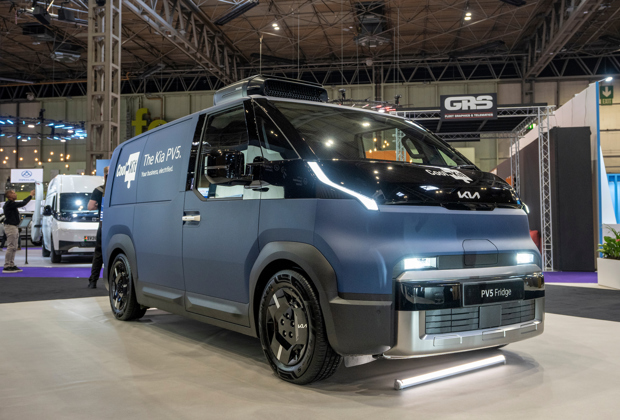
Kia has also announced its first five approved UK PBV Conversion Partners: Würth, Modul-System, CoolKit, TGS Automotive Group and GM Coachworks.
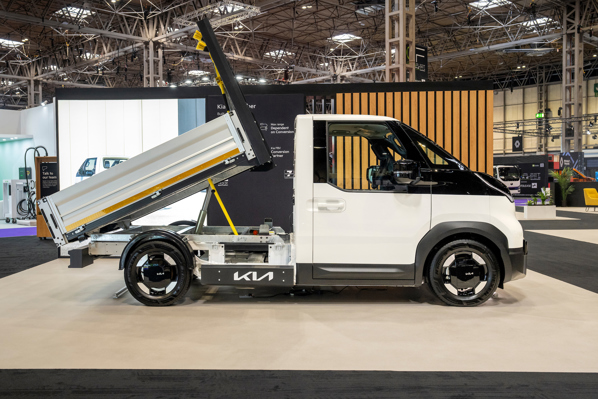
The partners will provide specialist solutions including racking systems, fridge conversions, lightweight tippers and wheelchair accessible vehicle conversions.
Meanwhile, ahead of its full arrival, the PV5 Cargo is already getting a series of 2027 model-year updates designed to make life easier for multi-drop drivers and fleet operators.
The most practical change is a redesigned roof antenna. By shaving just enough off the top, Kia has brought the PV5’s overall height down to 1899mm. This sub-2.0m height is a big win for urban drivers, as it ensures the van can comfortably clear the height-restricted barriers found in most multi-storey car parks.
Inside the cabin, Kia has listened to feedback regarding driver fatigue. The updated PV5 Cargo will now come with lumbar support as standard, along with a height-adjustable armrest for two-seat models.
Perhaps more importantly for UK crews, a three-seat option is finally joining the line-up. Initially available on the longer L2/H1 Cargo models, it allows for a two-plus-one setup in the front. Refinement also gets a boost thanks to a new composite bulkhead designed to keep road noise out of the cab.
The PV5 family is growing beyond the standard Cargo and Passenger models. Later this year, Kia will launch:
The Crew Van: Featuring a 51.5kWh battery and a sliding bulkhead, allowing you to switch between five seats or more load space in seconds.
The Chassis Cab: Making its UK debut at this year's CV Show, this version opens the door for bespoke conversions like dropsides or refrigerated units.
While these updates have been confirmed, Kia is keeping the final UK pricing and full specifications under wraps until June 2026.
With the PV5 sitting between the small and medium van segments, these tweaks — especially the lower roof and extra seating — position it as a very strong contender for those looking to switch to electric without losing out on everyday practicality.