
Toyota Hilux Review 2026
Toyota Hilux At A Glance

 Strong performance on and off-road. Impressive 10-year/100,000-mile warranty. Improved cabin comfort and tech
 Slightly smaller load bay than rivals. Noticeable body movement on rough roads.
More than 27 million Toyota Hilux pick-ups have been sold globally since the model made its debut in 1968, making it the world’s best-selling pick-up truck.
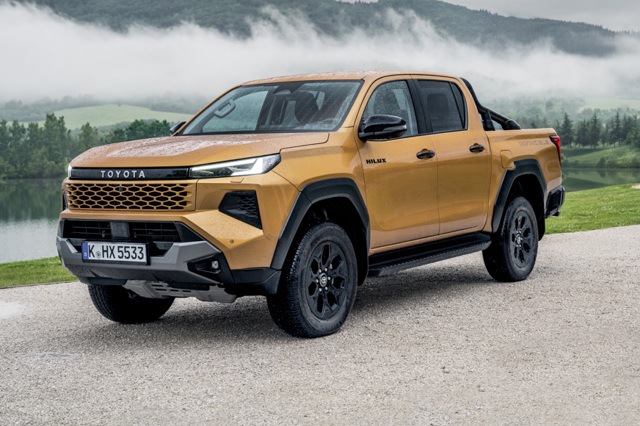
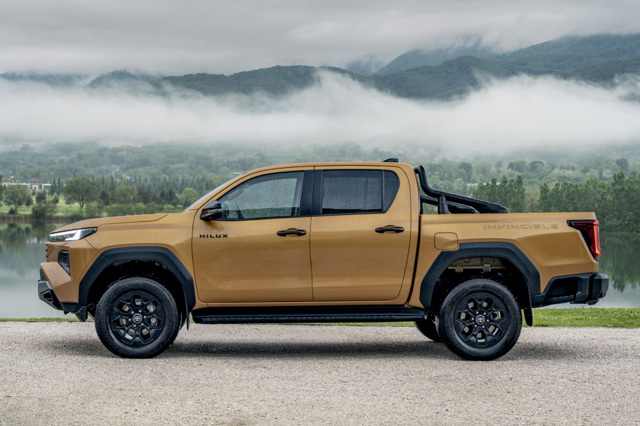
Renowned for its ruggedness, go-anywhere ability and good looks, the Toyota Hilux has a peerless reputation for reliability. This is the all-new ninth-generation model, which was designed not in Japan, but in Australia, where the Hilux isn’t just the best-selling pick-up truck, but the best-selling vehicle full-stop.
In the UK, there are two models. The electric Toyota Hilux BEV, which we’re reviewed separately and the 2.8-litre diesel, with a 48v mild-hybrid system. Current UK tax regulations mean it can be viewed as a light commercial vehicle rather than a car, so VAT can be reclaimed if you’re registered. It also qualifies for flat-rate commercial vehicle VED.
The engine is essentially the same as that of its predecessor, which adopted the MHEV system towards the end of the previous generation model’s life, but with software adaptations to make it more efficient. It’s a great engine, well suited to the Hilux’s character and it comes with permanent four-wheel drive, plus a six-speed automatic gearbox as standard.
Also new is electronically assisted power steering and although the ladder-frame chassis is essentially the same as before, there have been a few tweaks – for instance, stronger anti-roll bars, new engine and suspension mounts and revised spring rates, with more of a focus on ride comfort.
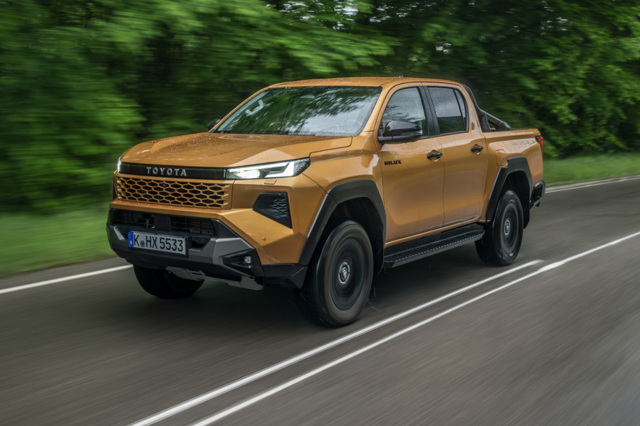
Styling-wise, it’s quite different especially at the front, where the new nose features a mixture of trapezoid angles similar to those seen on the latest Toyota Prius and Toyota C-HR.
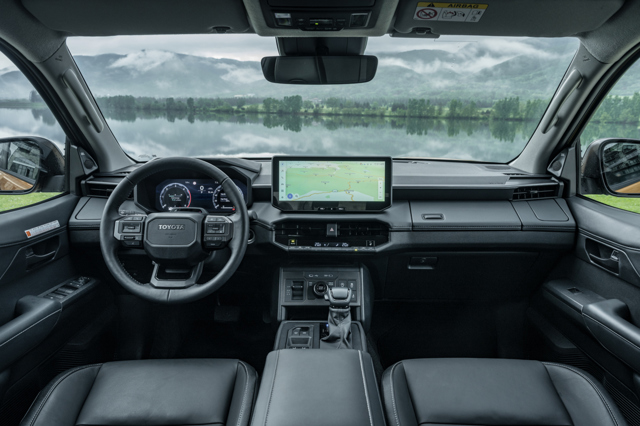
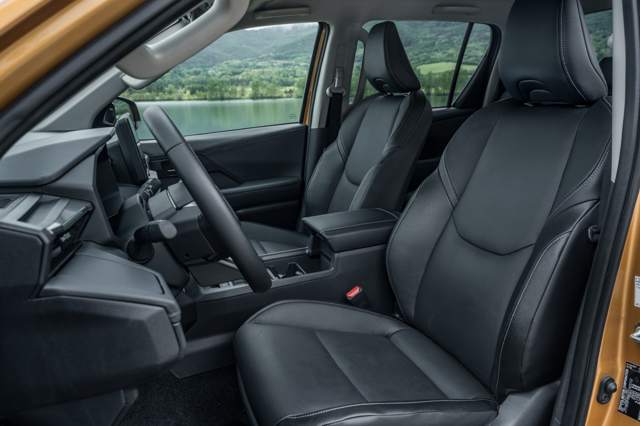
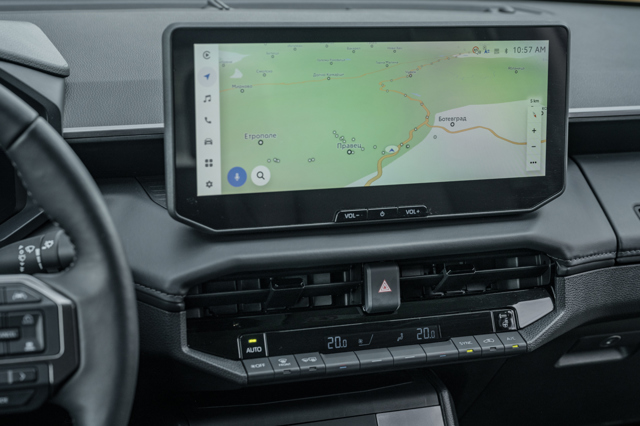
Inside, the seats are improved, there’s a less-chunky steering wheel and the dashboard is revised, while it also incorporates Toyota’s latest SmartConnect multimedia infotainment system.
There are four models – Active, Icon, Invincible and Invincible X. All versions have the same payload of 1065kg and an impressive towing capacity of 3500kg.
Also worth noting is that a two-seater version with the same four-door cabin, but minus the rear seats, will join the range in late 2026, helping you avoid car-based benefit-in-kin taxation, as well as offering a useful bit of storage space behind the seats.
Another strong selling point is Toyota’s 10-year warranty, which covers the Hilux up to 100,000 miles providing it is serviced in the Toyota dealer network – the service interval is 10,000 miles.
Running costs are similar to other pick-ups like the Ford Ranger, with a WLTP figure of 27.9 to 33.1mpg depending on model, and insurance groups between 40 and 49.
The Hilux remains one of the very best pick-ups in its class, if not the best. Good to drive, impeccably capable and backed up by an excellent warranty, it’s both a tough truck and a tough one to ignore.
Driving the Toyota Hilux
The Hilux is a rugged truck, so it’s no surprise that it also feels rugged from behind the wheel – but not in a bad way. It just feels tough and ready to work hard.
The engine is strong and pulls well, with a sharp throttle response. There’s a heady 500Nm of torque to play with and it pulls strongly even when fully laden, as we found out by driving one with 1000kg of ballast in the back.
The new electrically assisted steering is good: accurate and easy, but not too light – and it doesn’t lack feedback off-road, either. The brakes are strong and the handling predictable for a pick-up – despite the separate chassis, it feels a lot more like an SUV than a pick-up. The only downside is that you can feel the body moving around a little on the mounts, particularly if driving on consistently poor road surfaces.
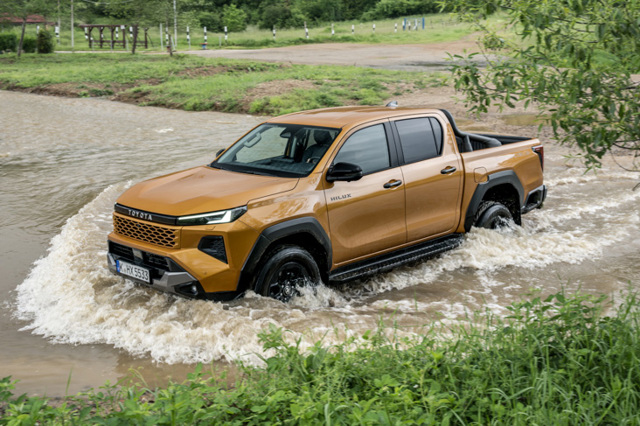
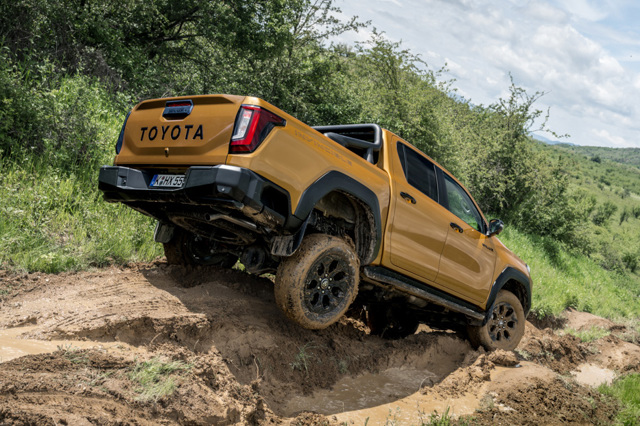
Off the road, it matches the impressive Ford Ranger. The transmission is manually switchable between high and low range and it’s backed up by a range of electronic driving modes – Multi-Terrain Select (as it’s known) has five modes that adapt the throttle and traction control to suit the terrain: Rock, Dirt, Sand, Mud and Snow.
Downhill Assist Control keeps things at walking pace on a steep descent, while Multi-Terrain Monitor shows you exactly where your wheels are when navigating tricky terrain.
Toyota Hilux interior
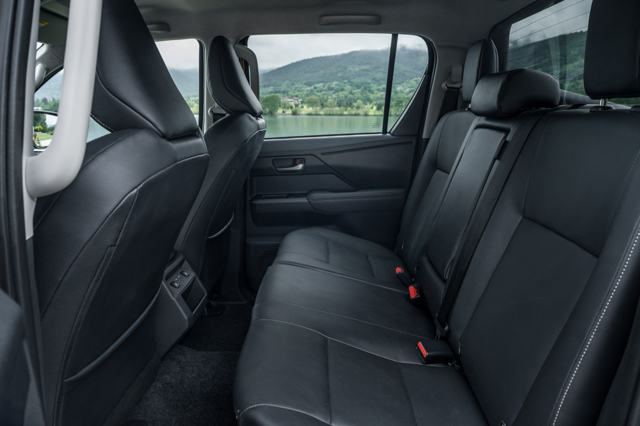
Although it’s built to be robust, the Hilux is also quite plush and the cabin is well laid out, with better, more supportive seats than the previous-generation model.
Cabin storage is good, with a chilled upper glovebox on higher-specification models, plus multiple cupholders, four USB-C sockets and large door pockets. We also like the fact that Toyota has stuck to proper rotary controls for the heating and ventilation.
Visibility is good for such a large vehicle and we found the latest multimedia system very easy to operate and sync to an iPhone.
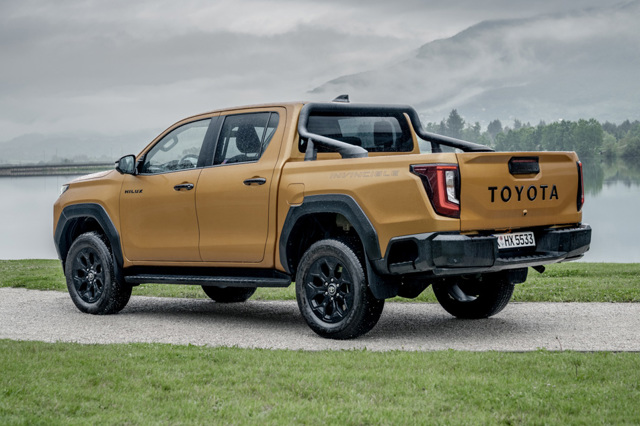
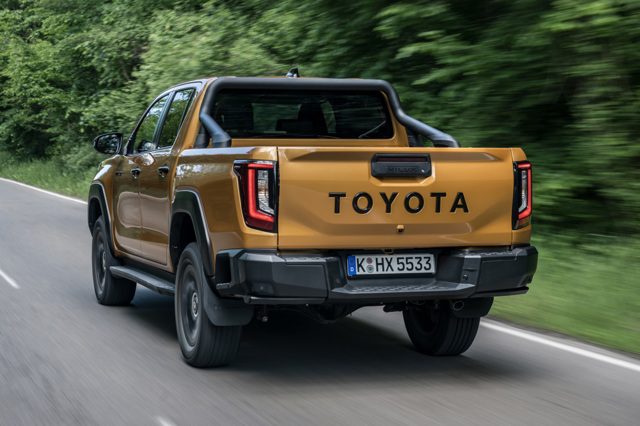
When it comes to work capability, the load bay is 1555mm long, a little longer than that of an Isuzu D-Max, but shorter than that of a Ford Ranger or Mitsubishi L200 – but we’re talking minimally. It’s also marginally narrower than most rivals, at 1438mm between the arches.
The payload is 1065kg (or 1025kg for the Invincible X, which has a slightly heavier kerbweight) and it can tow up to 3.5 tonnes, again on a par with the best in class. It’s not breaking any new ground in terms of payload or carrying capacity, but it's as capable as the competition.
Active is intended for buyers whose main priority is to use the Hilux for hard work and sits on steel wheels with a basic infotainment and assistance set-up.
Next up is the Icon, which gets 17-inch alloys and gains audio and infotainment upgrades, heated front seats, LED headlights and the Multi-Terrain Select package of driving modes.
Invincible gains 18-inch wheels, a larger instrument cluster, leather upholstery, a cooled glovebox and wireless charging pad.
At the top of the range is the Invincible X, which gets unique wheels, a chunky bar over the load bay, heated rear seats and 360-degree cameras.
