
Best electric vans 2026: The ultimate guide to range, payload and the ZEV Mandate
.jpg?width=620)
| Author: Craig Cheetham | Last updated: 24th February 2026 |
Why 2026 is the critical year for electric van buyers
The UK ZEV Mandate now requires 24% of all new van sales to be zero-emission. For you, this means diesel lead times are growing while electric incentives are peaking. We break down the top performers that won't leave you stranded.
Electric vans are improving with each generation as more advanced battery technology provides longer driving ranges, together with faster rates of charging.
There's a wide range of shapes and sizes available, from small vans through to those with a cargo capacity of up to 17 cubic metres. Whether you are looking to save money in terms of running costs or lower your emissions output, there’s an electric van for every need or purpose.
Here are the best electric vans on sale right now. If electric isn't right for you, check out our best medium diesel and petrol vans.
1. Best large electric van: Renault Master E-Tech (2026 Edition)
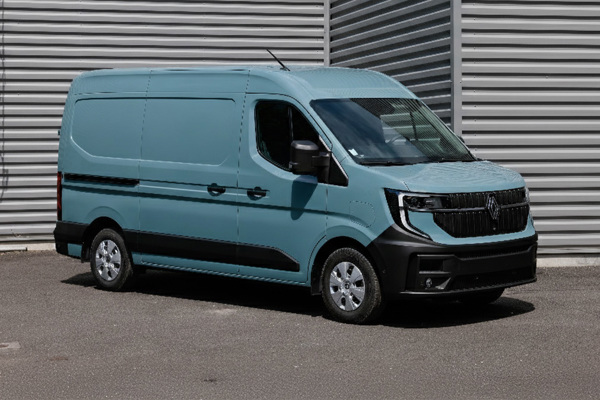
The headline stat: Up to 285 miles of WLTP range.
Why it wins: With its new 87kWh battery, the Master E-Tech finally kills range anxiety for regional couriers. It offers a massive 1625kg payload and can tow up to 2.5 tonnes — matching many diesel rivals.
Honest John Tip: The "OpenR Link" infotainment system (Google-based) is a game-changer for routing to working chargers.
Read our Renault Master E-Tech review
2. Best medium electric van: Ford E-Transit Custom
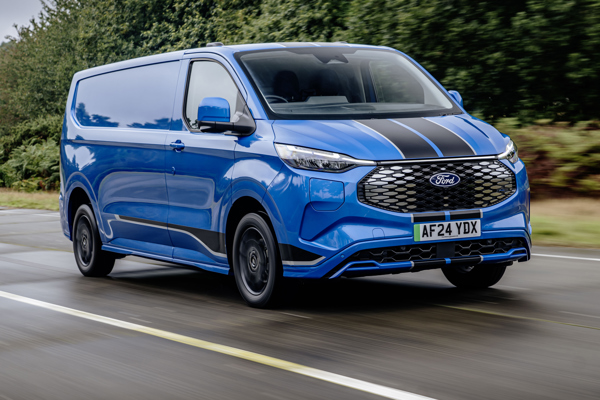
The headline stat: The UK’s best-selling van, now with a 209-mile electric range.
Why it wins: It drives exactly like the diesel version but with instant torque. The Pro Power Onboard system allows you to run power tools (up to 2.3kW) directly from the van's battery.
Real-world range: Expect around 160 to 170 miles in typical UK winter conditions.
Read our Ford E-Transit Custom review
3. Best small electric van: Ford E-Transit Courier
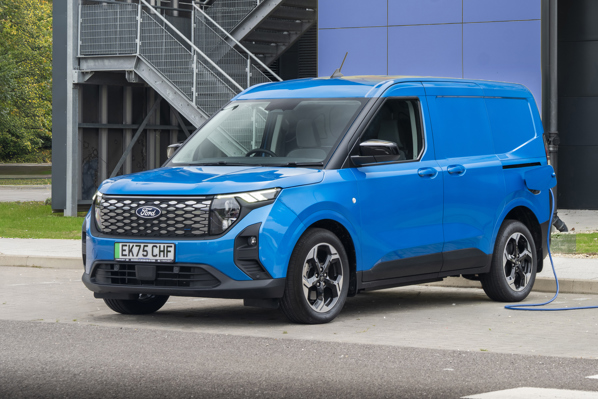
The headline stat: A city-sized powerhouse with up to 207 miles of range.
Why it wins: It’s built on a dedicated EV platform, meaning the load space isn't compromised by battery "humps." It can take two Euro pallets despite its compact footprint.
The frunk and fast charging: Because there’s no engine up front, you get a 44-litre frunk (front trunk) — perfect for storing messy charging cables so they don’t get buried under your tools. Even better, it supports 100kW DC fast charging, meaning you can add 70 miles of range in just 10 minutes. If you’re running a busy urban delivery route, that’s a 'cup of coffee and a sandwich' stop to get you through the afternoon.
4. The lifestyle choice: Volkswagen ID.Buzz Cargo
.jpg?rmode=max&width=599&height=399)
The headline stat: A class-leading 276 miles of WLTP range (79kWh battery).
Why it wins: It’s the only electric van that actually turns heads. Beyond the retro styling, the 2026 model receives a power bump to 286PS and an improved infotainment system. It feels more like a premium SUV than a commercial vehicle.
The trade-off: Payload is the Achilles' heel here. At 607kg–712kg, it’s built for light and bright businesses — think florists, photographers, or boutique brands — rather than heavy haulage.
Read our Volkswagen ID.Buzz Cargo review
5. The fleet benchmark: Vauxhall Vivaro Electric
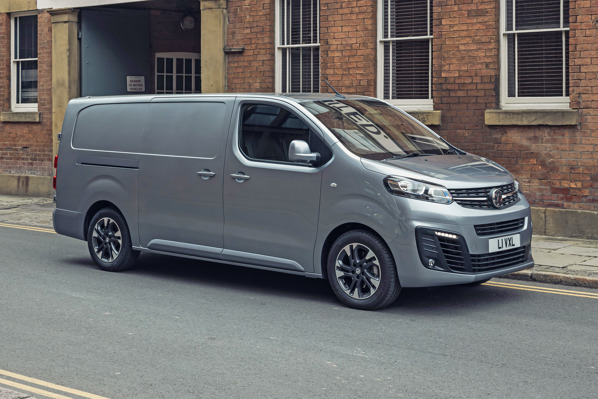
The headline stat: Available with a 75kWh battery offering up to 219 miles of range.
Why it wins: It’s the sensible shoes of the electric van world. It offers a perfect middle ground: a 1000kg payload and a car-like driving position. Because it shares a platform with Peugeot, Citroen and Fiat parts are easy to source.
Honest John Tip: Keep an eye out for "Pro" trim levels which now include a 10-inch touchscreen and improved driver aids as standard for 2026.
Read our Vauxhall Vivaro Electric review
You may also like
- Worried about payload? The 10 best large vans for heavy-duty hauling
- Towing a trailer? The best vans for 2500kg towing capacity
- Looking for a deal? How to claim the £5000 government Plug-in Van Grant
6. The luxury long-hauler: Mercedes eSprinter
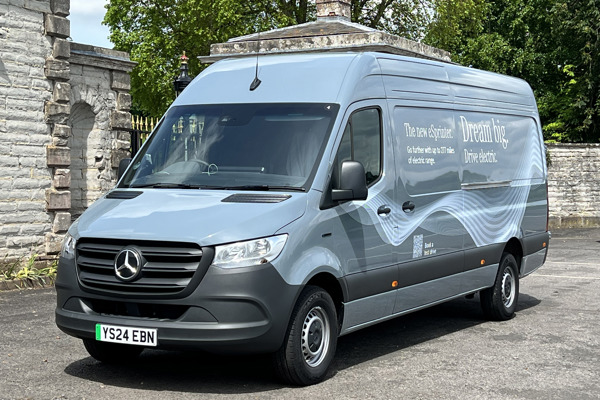
The headline stat: An enormous 113kWh battery delivering up to 271 miles.
Why it wins: Mercedes has finally fixed the eSprinter. The previous model’s sub-100-mile range is a distant memory. The 2026 version is a tech powerhouse with the MBUX infotainment system and active thermal management to keep the battery efficient even when the heating is cranked up.
The C1 licence catch: Because of that massive battery, the long-range model has a 4.25-tonne Gross Vehicle Weight. If you passed your test after 1997, you may need a quick "derogation" assessment to drive it on a standard license.
Read our Mercedes eSprinter review
7. The budget challenger: Maxus eDeliver 9
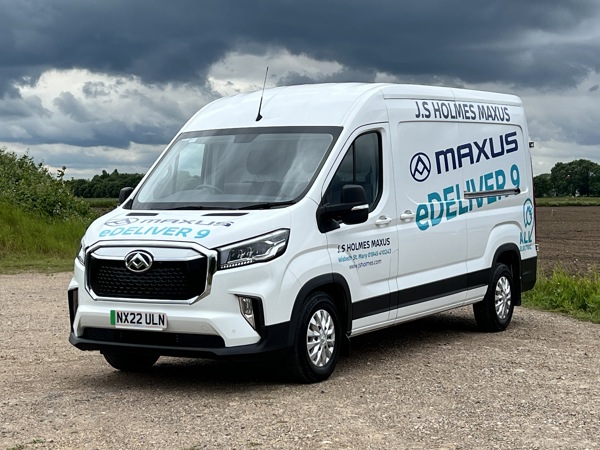
The headline stat: Up to 219 miles of range and an 80% charge in 45 minutes.
Why it wins: If you need a big van but the Mercedes or Ford prices make your eyes water, the Maxus is the answer. It’s a no-nonsense tool with a 1200kg payload and a surprisingly high level of standard kit, including a 12.3-inch touchscreen.
Honest John Tip: Resale values for Maxus aren't as rock-solid as Ford or VW yet, so this is often a better van to lease than to buy outright.
Read our Maxus eDeliver 9 review
8. The efficiency king: Fiat E-Scudo
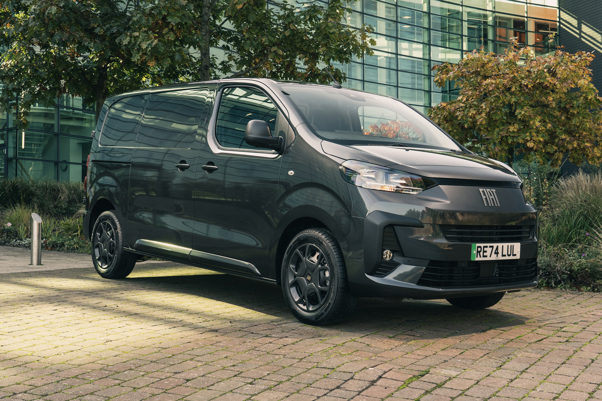
The headline stat: A sleek mid-sized van with up to 217 miles of range.
Why it wins: While it shares a platform with the Vauxhall Vivaro Electric, the Fiat version often comes with a more competitive work-ready lease price and slightly better aerodynamics. In 2026, Fiat’s Magic Cargo feature remains a standout, allowing you to slide long items (like ladders or pipes) through the bulkhead and under the passenger seat.
The efficiency edge: Fiat has optimized the regenerative braking software for 2026, making it one of the easiest vans to drive one-pedal in heavy stop-start city traffic, which saves significant wear on your brake pads.
Read our Fiat E-Scudo review
9. The payload heavyweight: Ford E-Transit
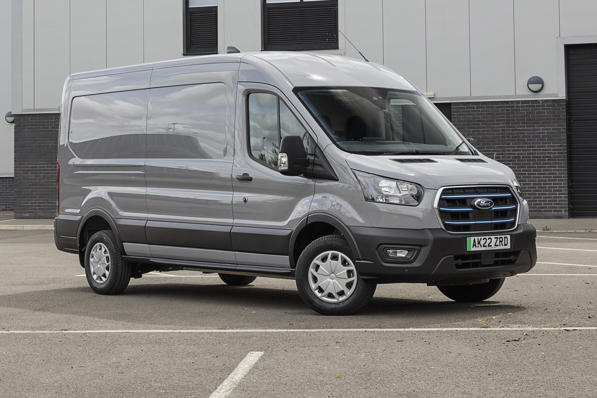
The headline stat: A massive 1758kg max payload and up to 249 miles of range.
Why it wins: This is the undisputed gold standard for heavy-duty electric haulage. Unlike many rivals that struggle once you load them up, the E-Transit's rear-wheel-drive motor provides incredible traction even at full capacity. For 2026, the updated 89kWh battery ensures that even a fully laden Jumbo model can still clear 180 miles in the real world.
Honest John Tip: If you’re a multi-drop driver, the Delivery Assist feature is a must — it automatically shifts into Park and closes the windows every time you step out of the van, saving you dozens of seconds on every stop.
Read our full Ford E-Transit review
10. The value dark horse: Toyota Proace Electric
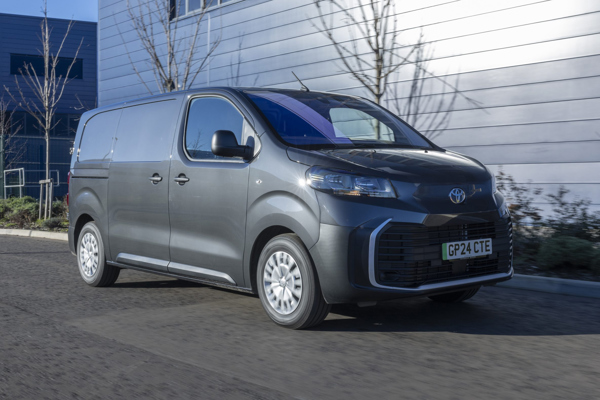
The headline stat: Backed by an industry-leading 10-year / 100,000-mile warranty.
Why it wins: If you are nervous about the long-term reliability of batteries, Toyota is the brand to buy. Mechanically, it's identical to the Citroen and Peugeot alternatives, but the Toyota Relax warranty (which tops up every time you service at a dealer) provides a level of resale security that the others simply can't match.
The 2026 update: The latest version features a completely redesigned cockpit with a 10-inch digital cluster and much-improved safety tech, including Lane Keep Assist that is actually helpful rather than intrusive.
Read our Toyota Proace Electric review
Frequently Asked Questions: Electric vans 2026
How much range do electric vans lose in winter?
On average, an electric van will lose 25% to 30% of its range when temperatures drop below 5°C. This is because batteries are less efficient in the cold and the heating system draws significant power. To combat this, look for a van with a heat pump (like the Ford E-Transit or Mercedes eSprinter) and use pre-conditioning while the van is still plugged into the charger to warm the cabin.
What is the UK ZEV Mandate and how does it affect me?
The ZEV (Zero Emission Vehicle) Mandate requires 24% of all new vans sold in the UK in 2026 to be electric. This doesn't mean you can't buy a diesel, but it does mean manufacturers are incentivizing electric models more heavily. By 2030, the sale of pure petrol and diesel vans will be banned, with only specific hybrids allowed until 2035.
Can I drive a 4.25-tonne electric van on a standard car licence?
Yes, under a government derogation, you can drive an electric van up to 4,250kg (4.25 tonnes) on a standard Category B (car) licence, provided you have held that licence for at least two years. This extra allowance is to compensate for the weight of the heavy batteries. However, be aware that the van must still follow the speed limits for goods vehicles and may require a tachograph if used for hire and reward.
How much is the Plug-in Van Grant (PiVG) in 2026?
The Plug-in Van Grant remains available for 2026. It offers up to £2500 for small vans (under 2500kg GVW) and up to £5000 for large vans (between 2,500kg and 4,250kg GVW). Your dealer usually applies this discount at the point of purchase, so the price you see advertised often already includes this grant.
Do electric vans have the same towing capacity as diesel vans?
Not always, but the gap is closing. While some older electric vans weren't rated for towing at all, the Ford E-Transit and Renault Master E-Tech can now tow up to 2500kg (2.5 tonnes). Always check the "braked towing capacity" in the spec sheet, as towing will significantly reduce your driving range.
Is it cheaper to run an electric van than a diesel van?
If you can charge at home or at your depot overnight on a low-cost commercial rate, an electric van is significantly cheaper to run per mile. However, relying on public rapid chargers can be as expensive, or more so, than diesel. You also save on VED (road tax) and avoid all ULEZ and Clean Air Zone charges, which can save a city-based business over £3000 a year.
